IMPORTANT NEEDLEWORK EXECUTED CARPET, INITIALED... Lot 28
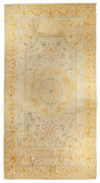
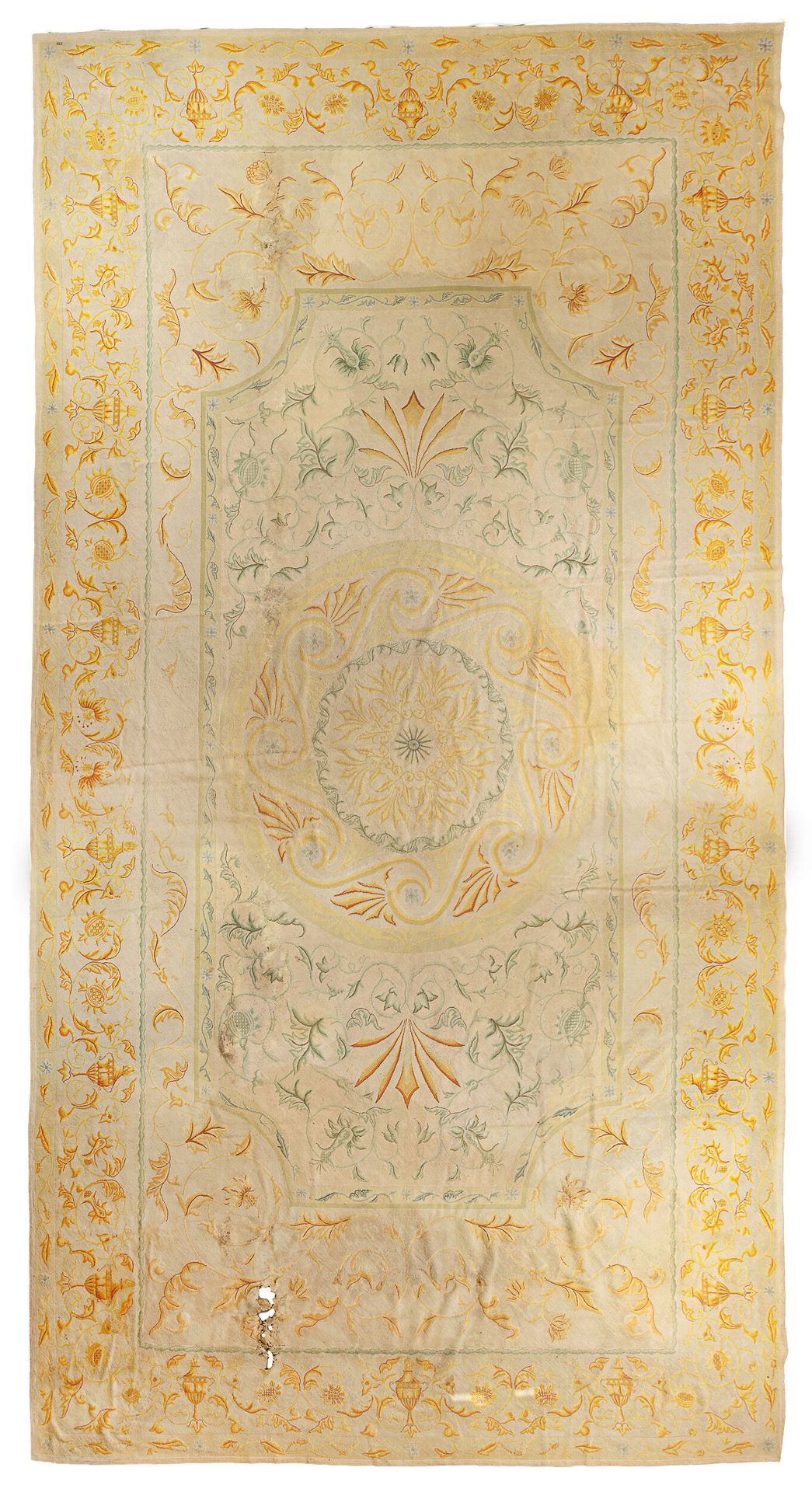
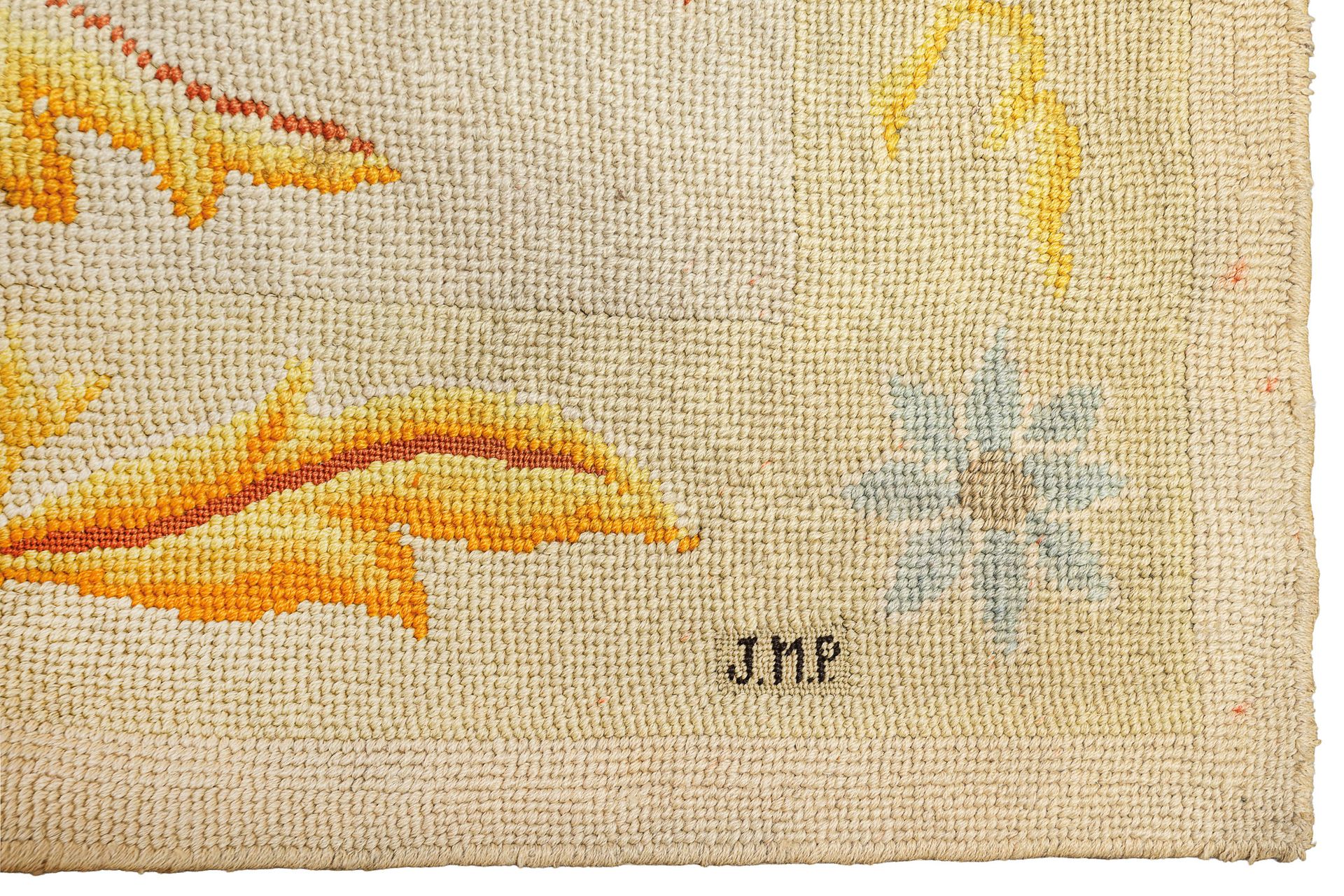
IMPORTANT NEEDLEWORK EXECUTED CARPET, INITIALED J.M.P. PONTREMOLI, ENGLAND, CIRCA 1930
Cm 513X960
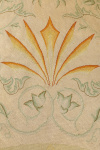
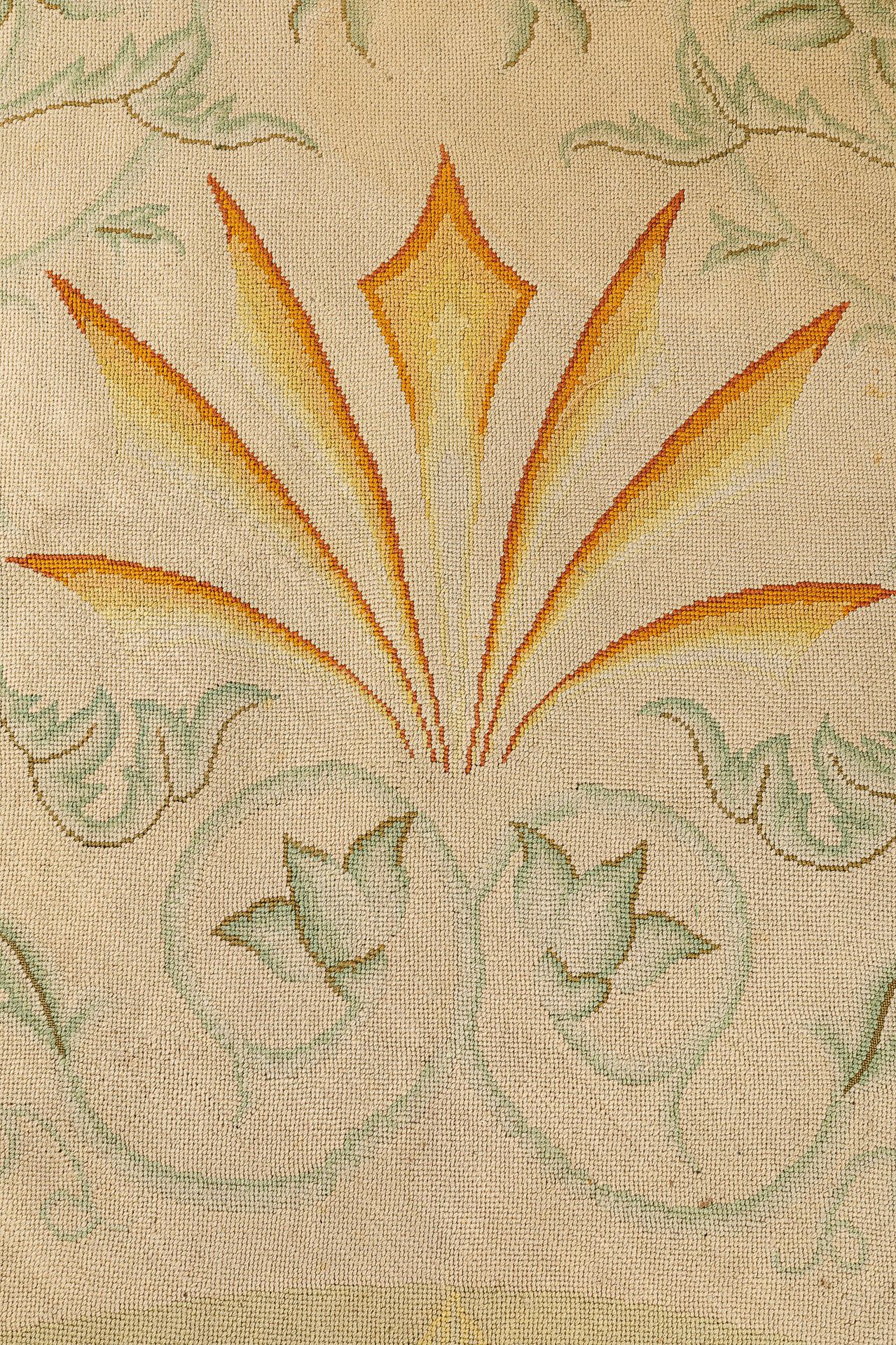
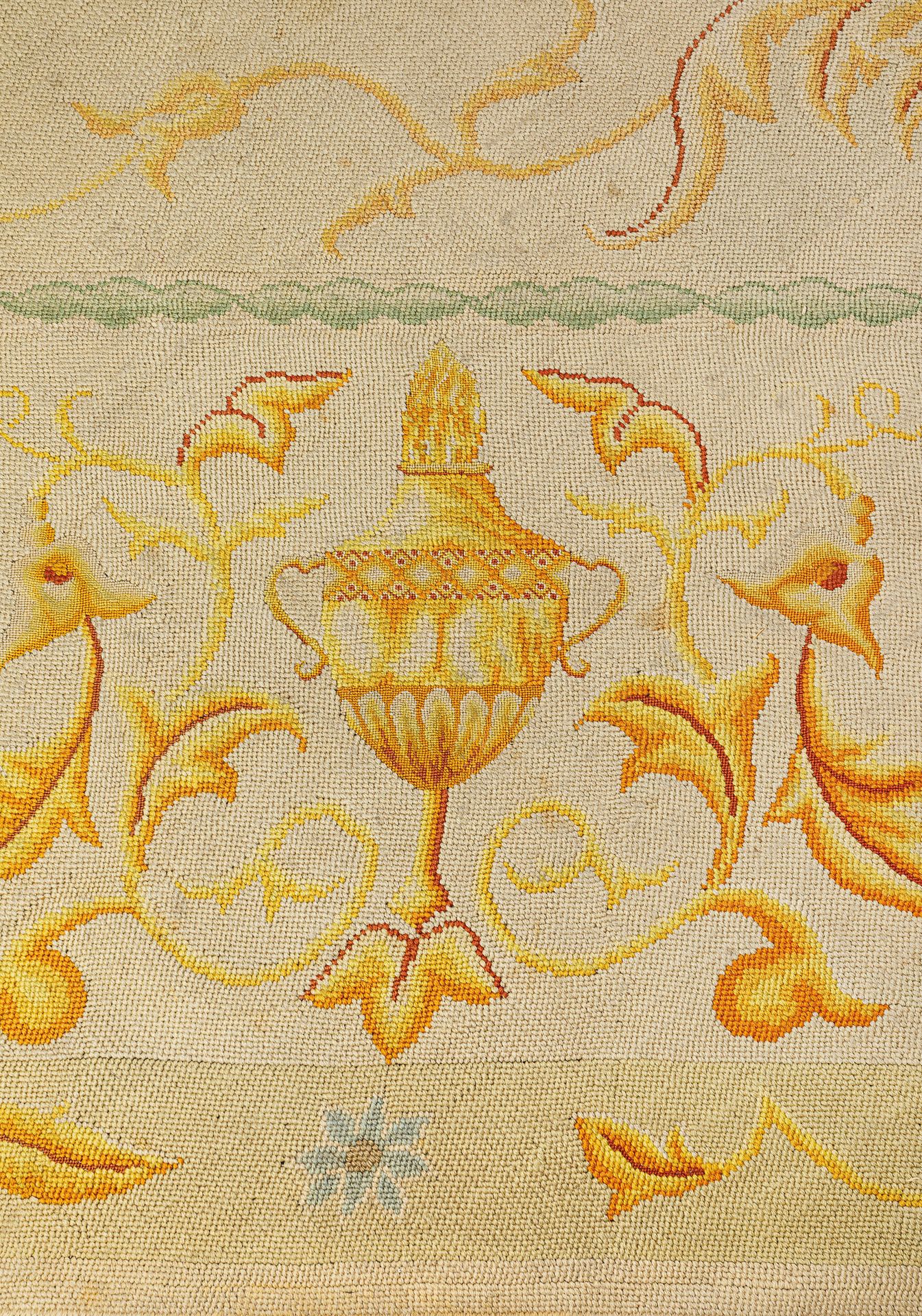
Needleworked in gros-point with petit-point details, at the workshop of Jacques Mereno Pontremoli (1886-1952)
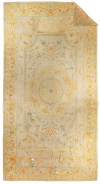
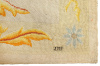
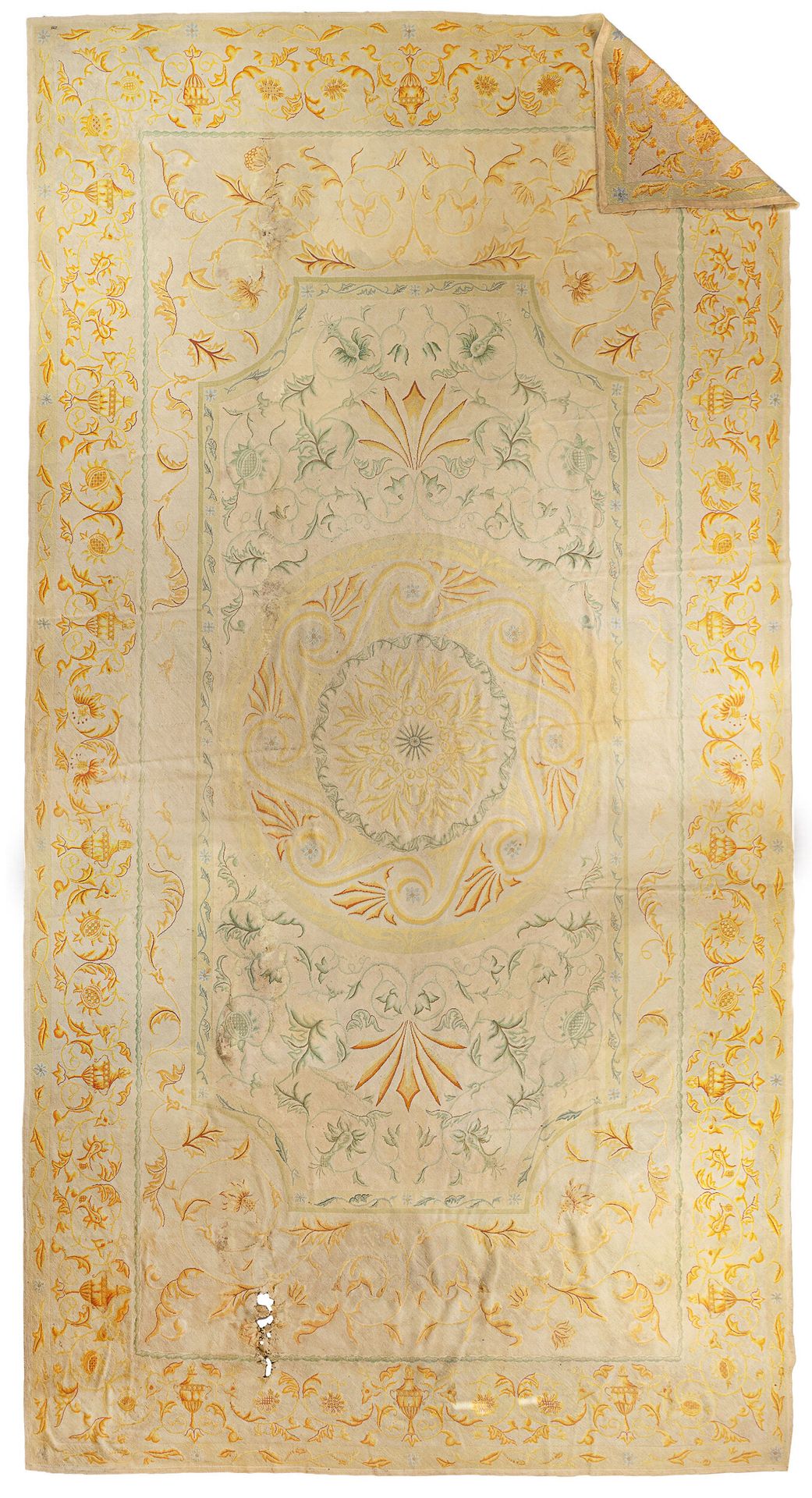
Has a large band affected by mildew, with visible holes and critical areas and some stains
AN IMPORTANT ENGLISH RUG, SIGNED J.M.P. PONTREMOLI, CIRCA 1930; MOLD, HOLES, SPOTS
Sometimes, as with this rug, an initials JMP is found in an outer edge of a corner. The Pontremoli family, of Italian Sephardic descent, established workshops in Paddington, West London in 1910, supplying home furnishings, particularly antique rugs and textiles. They became particularly famous in the 1930s through the 1950s for combining their two fields of expertise and produced rugs that were based on 16th and 17th century textiles and early English carpets. In 1931 there was a campaign to encourage the public to buy English-made items, and the Pontremoli family took this exhortation to heart, using British materials and training local women to work with them, with great success. They were commissioned to produce pieces, as recorded in their archives, for embassies in London and abroad and for many distinguished houses. Pontremoli's clients included H.M. Queen Mary (who granted Pontremoli a royal warrant), H.R.H. The Duke of Kent and Her Majesty the Queen, Henry Channon, M.P. among others. The carpets offered here, were a couple commissioned for the ballroom of the Somerset house in Stratford Place, and each piece is remembered to have taken eleven ladies, two years to complete. Many of Pontremoli's carpet designs come from the long and rich tradition of European carpets and textiles. Earlier pieces were in the Directoroire, Regency or Adam styles, complementing architectural interiors. Then the designs became more typically, beautifully balanced compositions, including overall main fields of floral and foliate designs, often with isolated individual flowers and/or scrolling foliate paths, with complementary borders that sometimes incorporated the characteristic Tudor rose motif in the corners, or a flower head flanked by stylized stems. The complexity of small stitch work most often found only in isolated motifs is evident in the present examples throughout the flowers. The background colors were often a pastel shade, and in the pieces offered there is a pale yellowish ivory color, with pastel floral and foliate motifs.
See an example signed JMP, early 1930s, with eau-de-nil ground is very rare.
Reference bibliography:
Mayorcas, J., English Needlework Carpets, 16th and 19th centuries, Leigh-On Sea, Publishers Limited, 1963
Lewis F., The Pontremoli Collection, Leigh-On Sea, Publishers Limited, 1942.
- The cost is converted to USD at the rate of 1 EUR = 1.172125 USD on 2025-09-29.
-
Sign in to view
Lot number
-
Sign in to view
Estimate
-
2025-09-29
Sale date
-
Sign in to view
Realised price
-
Sign in to view
Opening price
-
Sign in to view
House name
-
Sign in to view
Auction sale name
-
Sign in to view
Location
-
Categories
Sign in to view -
Tags
Sign in to view