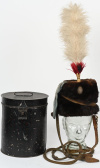
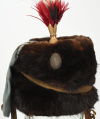
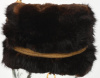
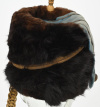
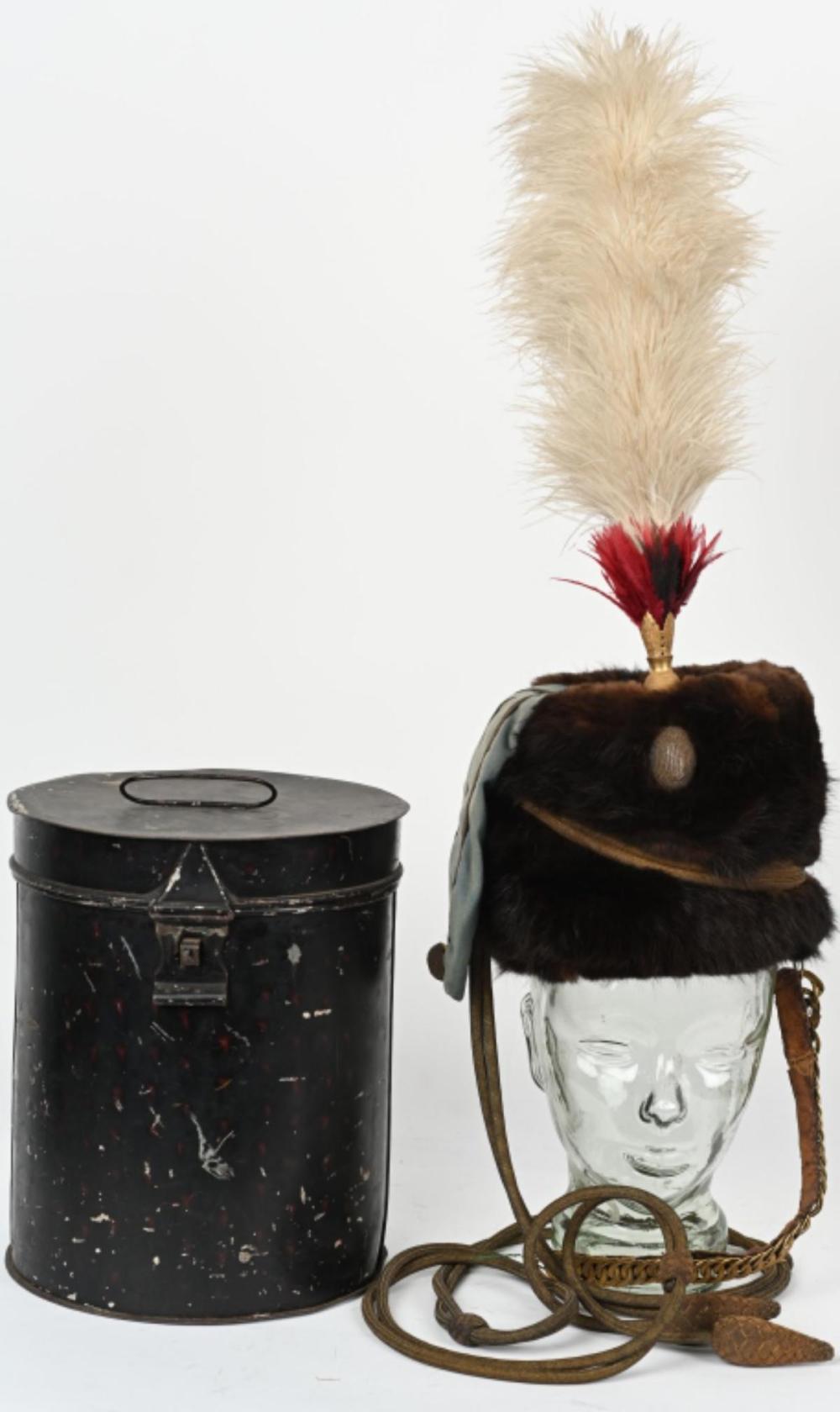
BRITISH VICTORIAN HUSSAR BUSBY LIGHT BRIGADE CASE
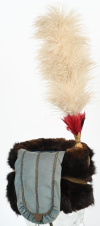
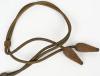
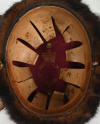
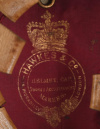
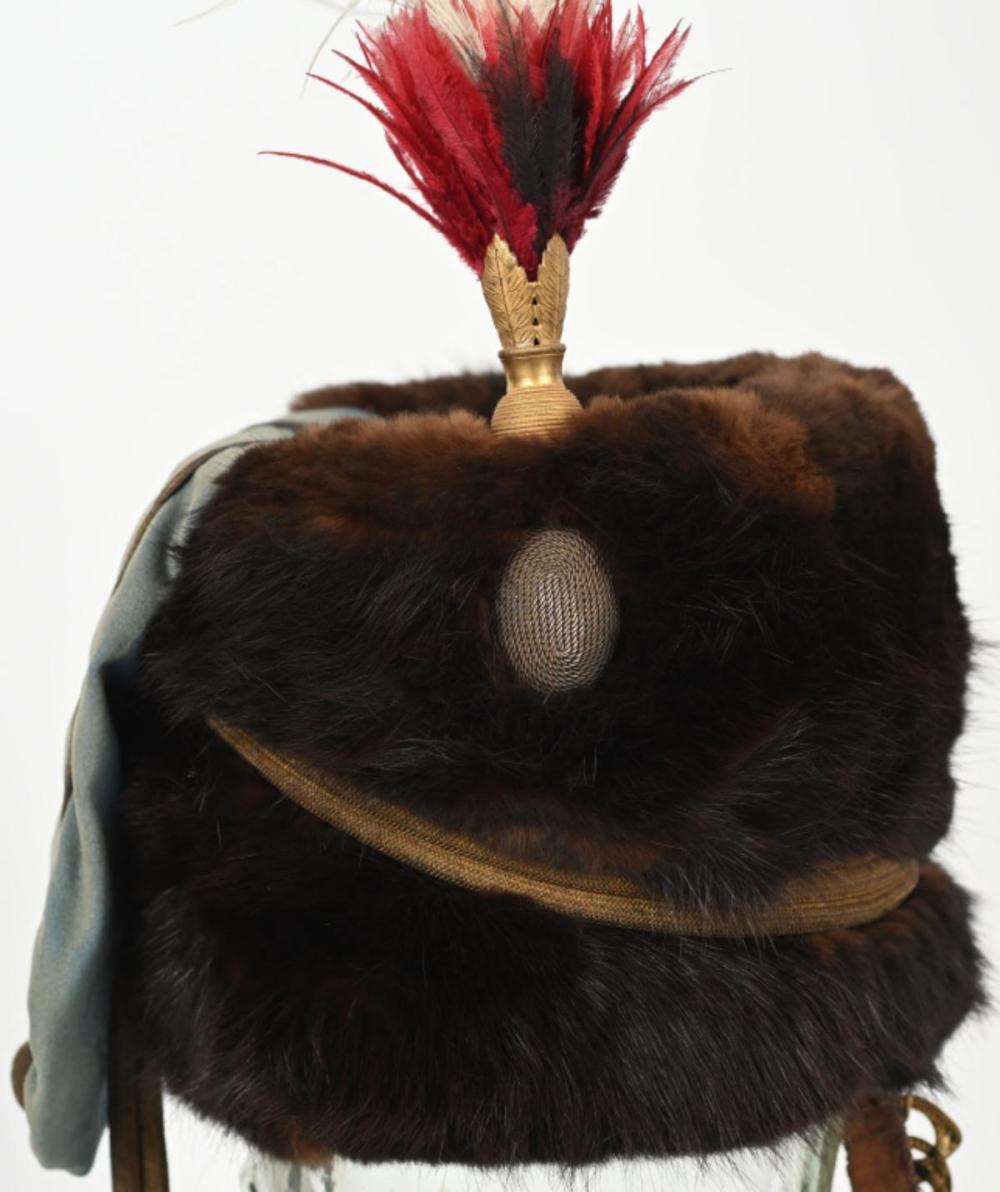
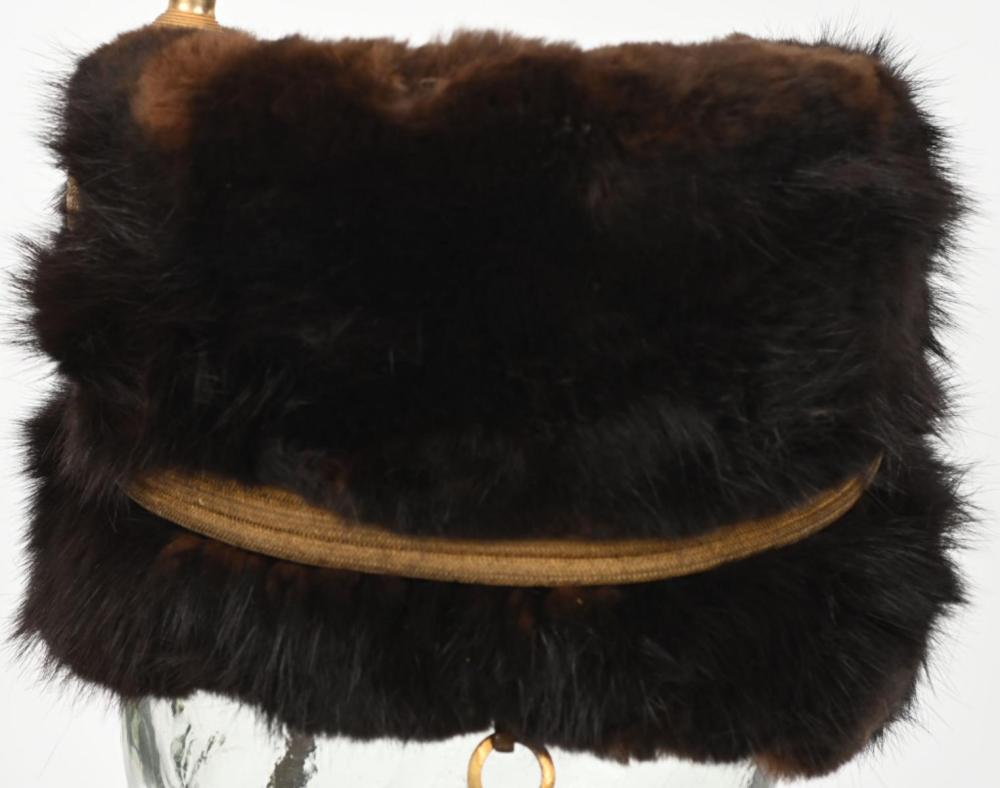
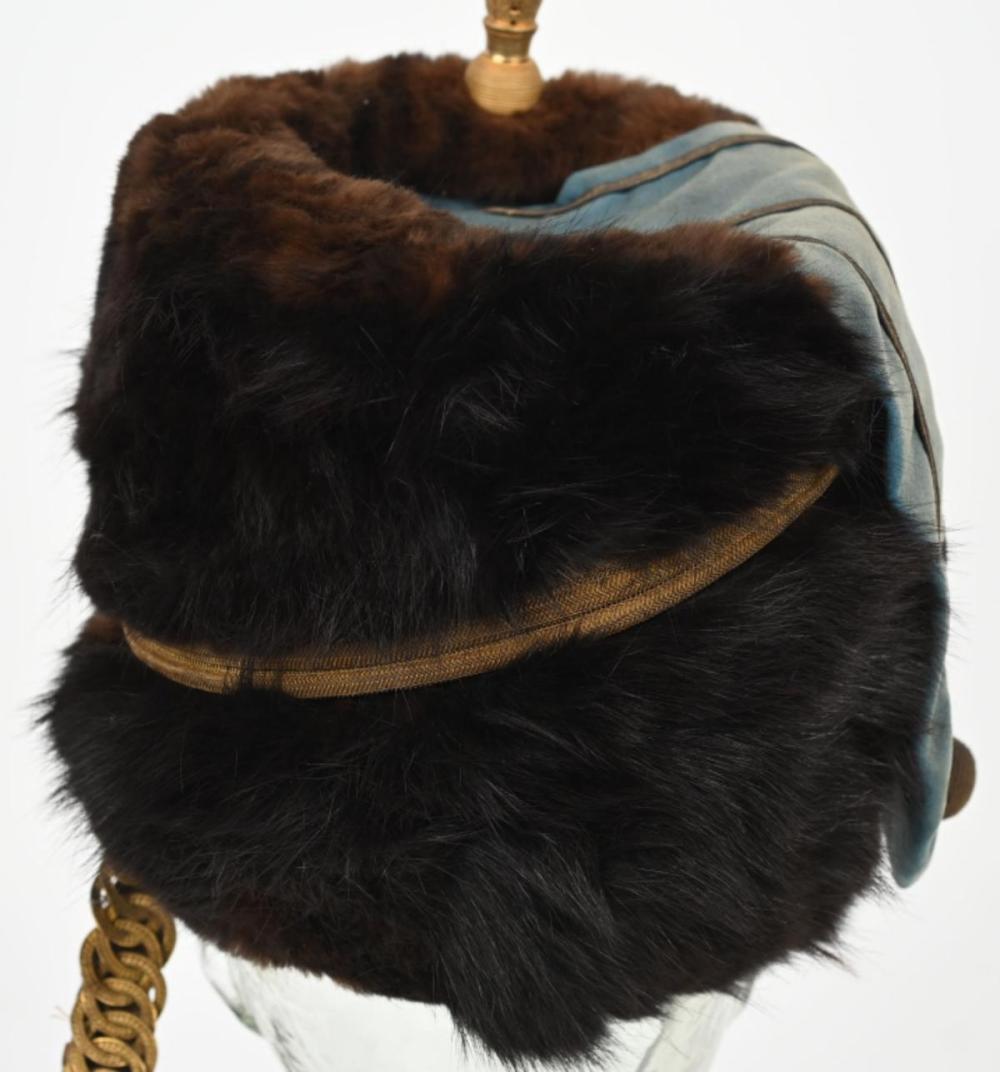
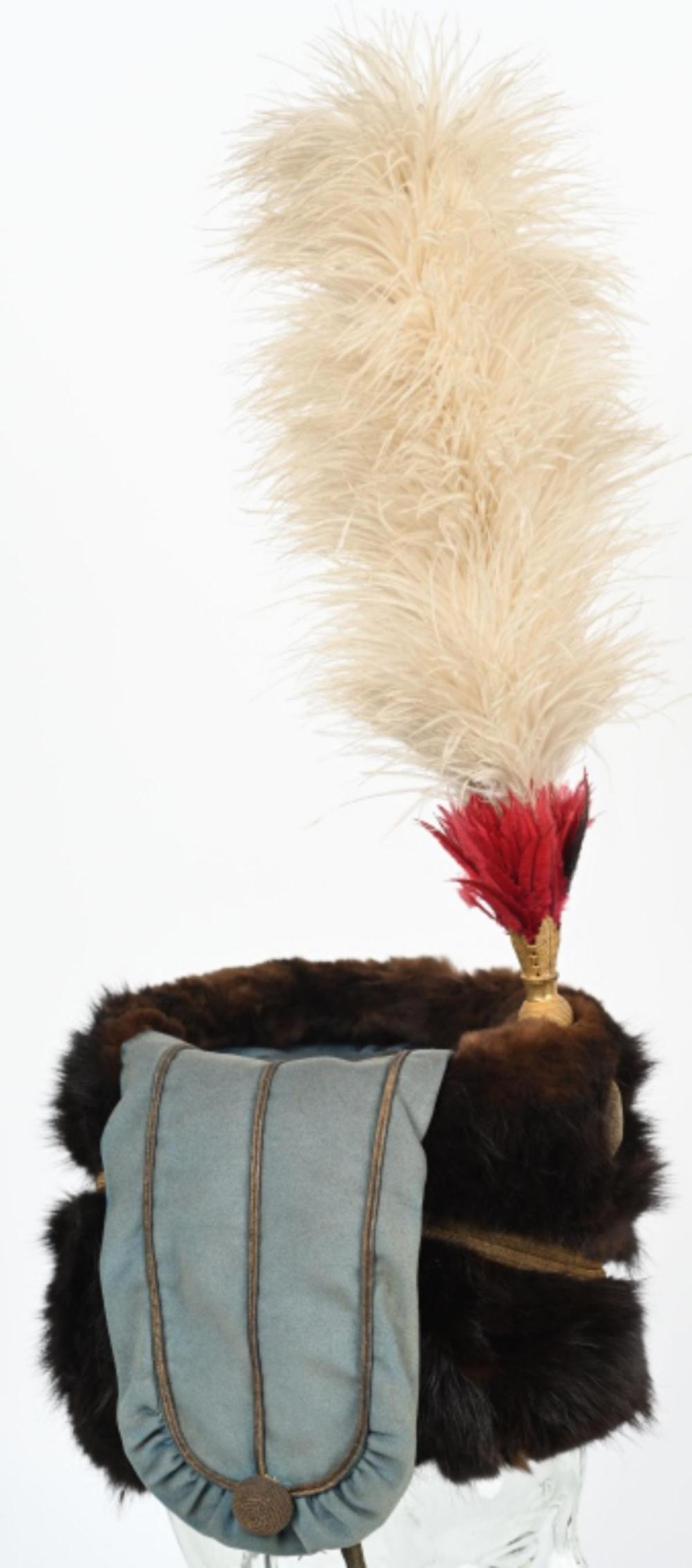
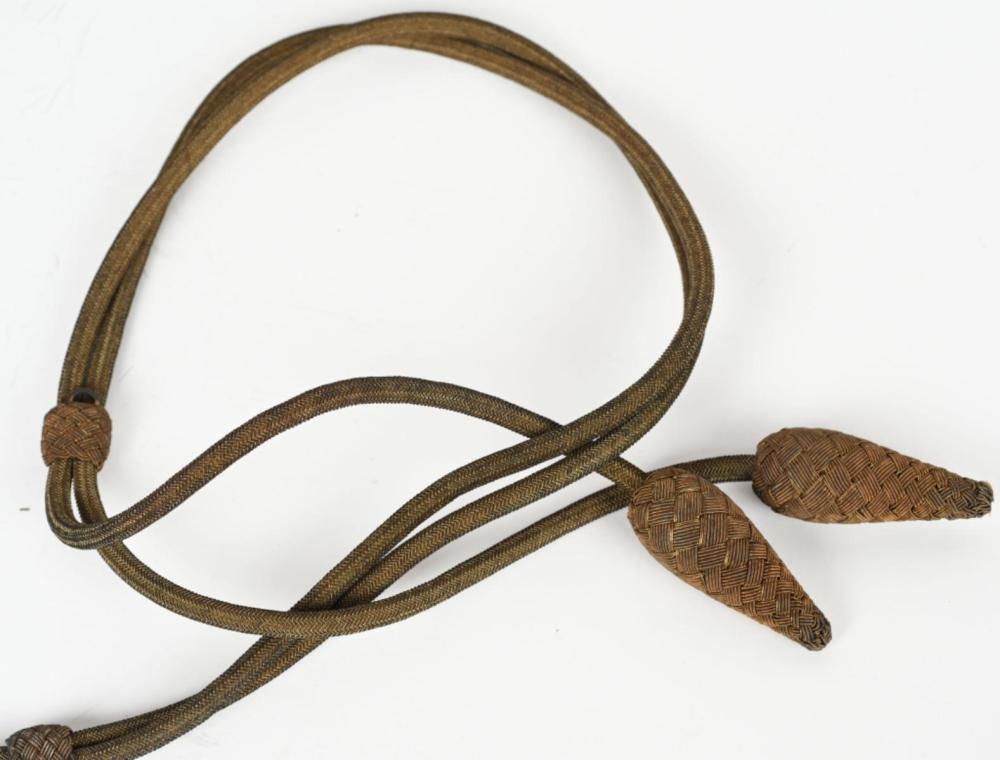
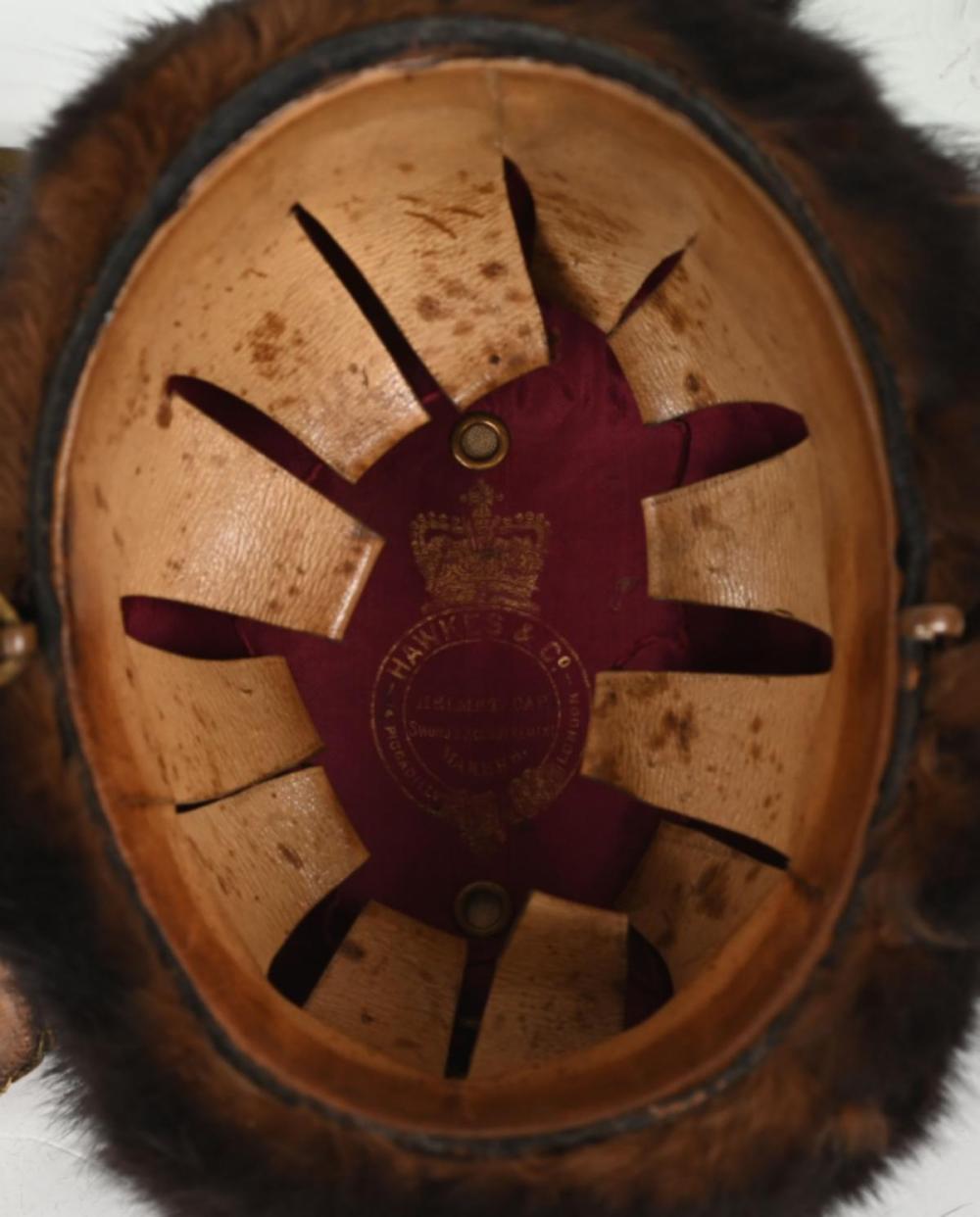
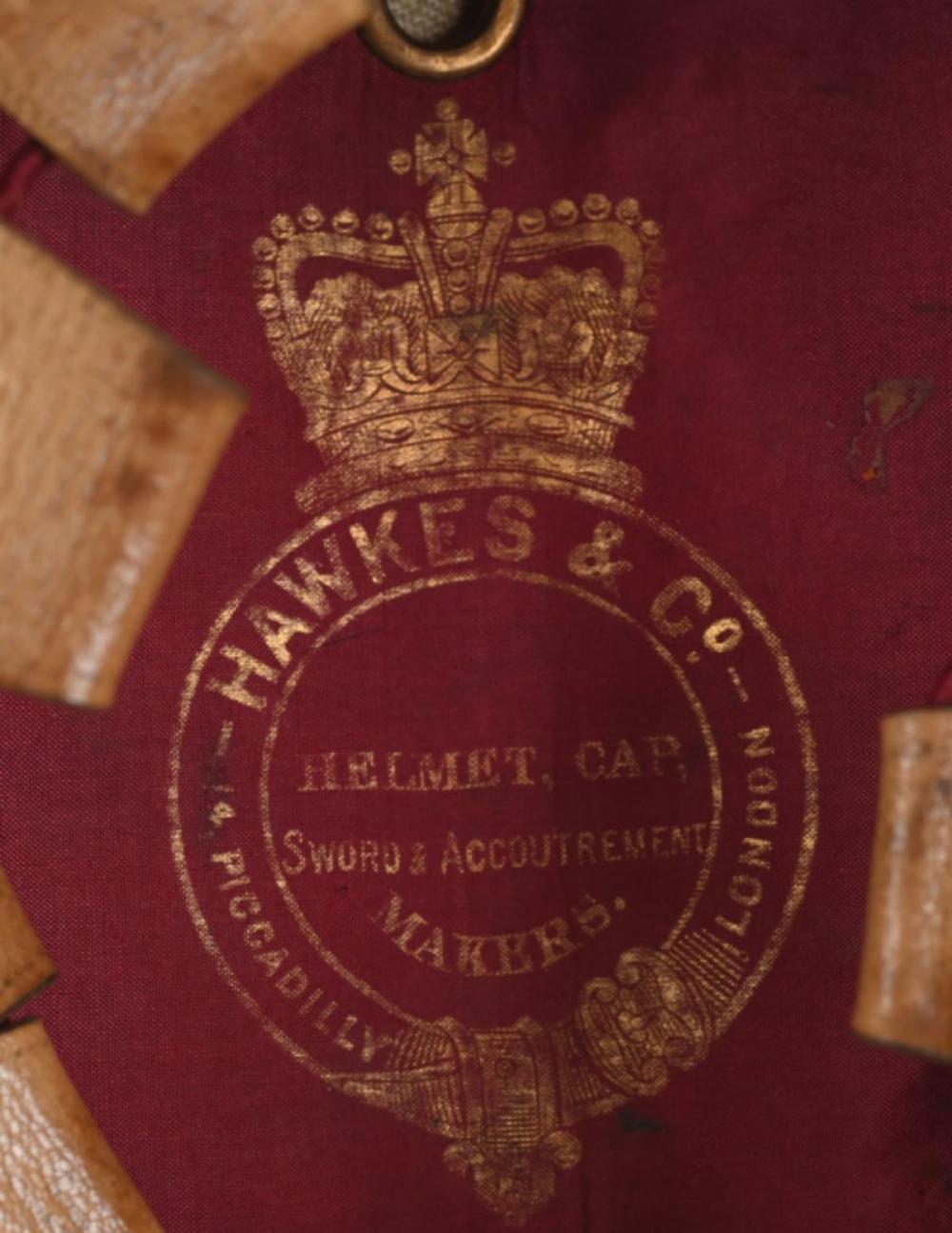
Cased Victorian Hussar Bearskin Busby in excellent condition used by the Royal Horse Artillery, and has been ever since the infamous Charge of the Light Brigade in the 1850s. The helmet is complete with the symbolic right side Blue Bag and yellow/gold cord surrounding, along with chin scales and yellow cockade and feather plume. Size is approximately a US 7 1/4 and is maker marked HAWKES & Co. HELMET, CAP, SWORD ACCOUTREMENT MAKERS Piccadilly London. Hawkes & Company (English, founded 1771), late 19th to early 20th century. Busby (Military Headdress) Busby is the English name for the Hungarian prémes csákó ("fur shako") or kucsma, a military head-dress made of fur, originally worn by Hungarian hussars. In its original Hungarian form the busby was a cylindrical fur cap, having a bag of colored cloth hanging from the top. The end of this bag was attached to the right shoulder as a defense against saber cuts. In Great Britain busbies are of two kinds: (a) the hussar busby, cylindrical in shape, with a bag; this is worn by hussars and the Royal Horse Artillery; (b) the rifle busby, a folding cap of astrakhan (curly lambswool) formerly worn by rifle regiments, in shape somewhat resembling a Glengarry but taller. Both have straight plumes in the front of the headdress. The popularity of this military headdress in its hussar form reached a height in the years immediately before World War I (19141918). It was widely worn in the British (hussars, yeomanry, and horse artillery), German (hussars), Russian (hussars), Dutch (cavalry and artillery), Belgian (Guides and field artillery), Bulgarian (Life Guards), Romanian (cavalry), Austro-Hungarian (Hungarian generals), Serbian (Royal Guards), Spanish (hussars and mounted cazadores) and Italian (light cavalry) armies. There were some variations in the materials of which cavalry busbies were made. Thus Russian Cossacks of the Imperial Guard used black sheepskin, Guard Hussars dark brown long-haired fur, and line Hussars black lambswool. All but one of the twenty Prussian Hussar regiments wore sealskin busbies dyed in black, while their officers favored dark brown otter-skin. The Brunswick Hussar Regiment No. 17 had the distinction of being issued busbies made of bearskin. Possibly the name's original sense of a "busby wig" came from association with Richard Busby, headmaster of Westminster School in the late seventeenth century; the later phrase buzz wig may have been derived from busby. An alternative explanation is that the British hussar cap of the early 19th century was named after the hatter who supplied the officer's versionW. Busby of the Strand London. The modern British busby is worn with full dress by the Waterloo Band of The Rifles, the Royal Horse Artillery and ceremonial detachments at regimental expense. In its hussar version it is now made of black nylon fur, although Bandmasters still retain the original animal fur. The busby should not be mistaken for the much taller bearskin cap, worn most notably by the five regiments of Foot Guards of the Household Division (Grenadier, Coldstream, Scots, Irish and Welsh Guards). Around 1900 the word "busby" was used colloquially to denote the tall bear and raccoon skin "caps" worn by foot guards and fusiliers and the feather bonnets of Highland infantry. This usage is now obsolete. The Busby came to us from the American Armored Foundation, Inc. Tank and Ordnance Memorial Museum. The AAF Tank Museum was a living memorial dedicated to the Tank and Cavalry soldiers of the world. Before 1981 some of the artifacts that make up the AAF Tank Museum was a private collection belonging to Mr. William Gasser. Mr. Gasser felt that his collection would be beneficial in educating present and future generations to the sacrifices made and the technologies gained during war. Therefore, in 1981 the AAF Tank Museum was established as a non-profit charitable organization, and Mr. Gasser donated his private collection to the Tank Museum. Mr. Gasser is still active as Volunteer Director and Curator of the Tank Museum and his knowledge of military history has been a great asset to the museum. Unfortunately after 20 years of operation it had to close its doors, which is when this Busby was acquired.
-
Sign in to view
Lot number
-
Sign in to view
Estimate
-
2024-06-29
Sale date
-
Sign in to view
Realised price
-
Sign in to view
Opening price
-
Sign in to view
House name
-
Sign in to view
Auction sale name
-
Sign in to view
Location
-
Categories
Sign in to view -
Tags
Sign in to view