BRUTTIUM, Rhegion. Anaxilas. Tyrant, circa 494/3-462/1
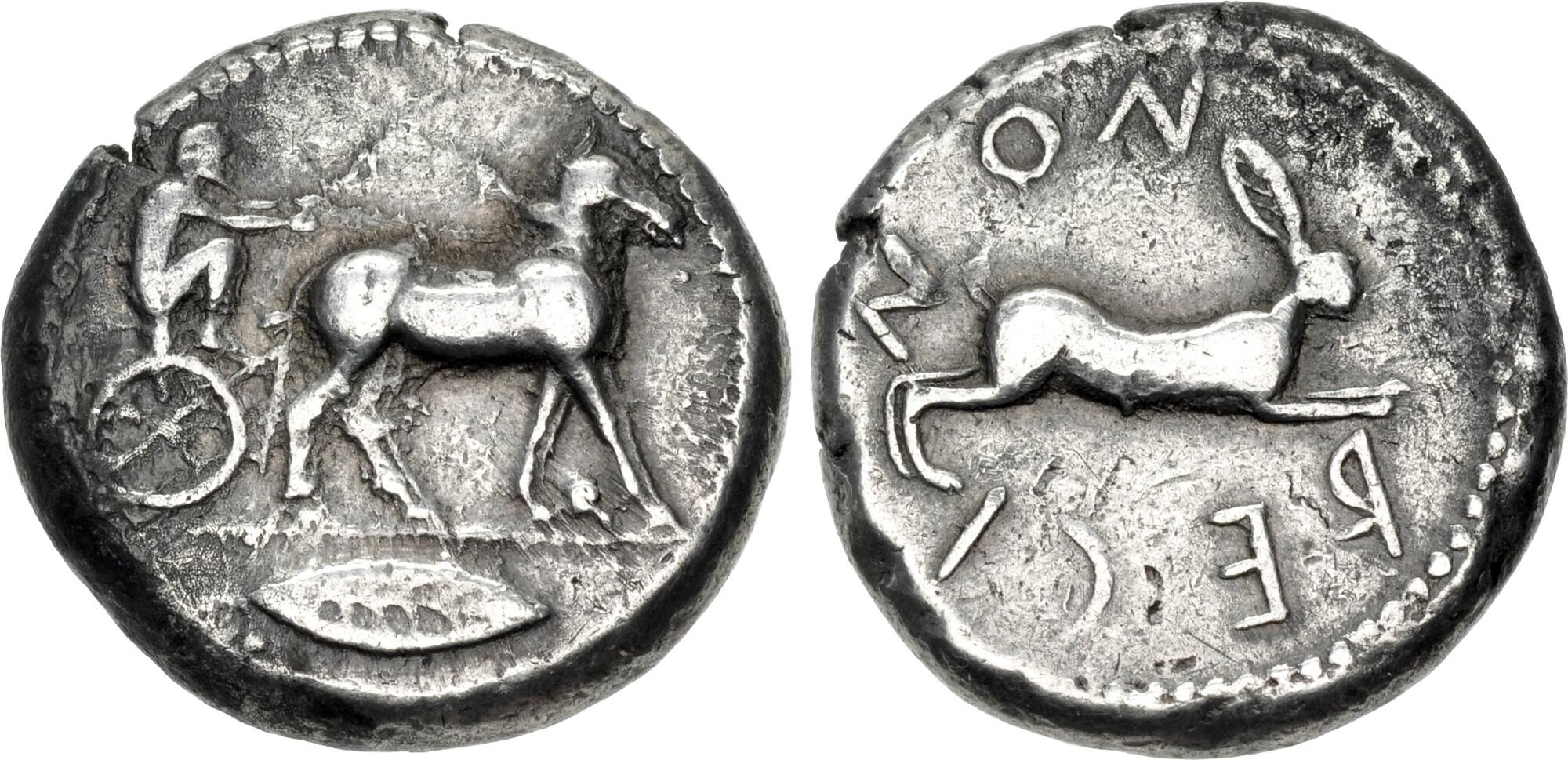
BRUTTIUM, Rhegion. Anaxilas. Tyrant, circa 494/3-462/1 BC. AR Tetradrachm (26.5mm, 17.13 g, 2h). Struck circa 475–474 BC. Charioteer driving slow biga of mules right; in exergue, leaf right / Hare springing right. Caltabiano Series III, 102 (D52/R60); HN Italy 2472. Toned, some find patina remaining, minor die wear and patch of granularity. VF.
From the DFA Collection. Ex Numismatik Nauman 122 (6 November 2022), lot 16; Leu Numismatic AG Web Auction 18 (18 December 2021), lot 179.
Rhegion (mod. Reggio Calabria), a Chalkidian colony established in the eighth century BC, was among the earliest Greek settlements in southern Italy. Situated on a harbor at the mouth of the river Apsias at the tip of Italy along the Sicilian Strait opposite Zankle (Messana), the city was perfectly located to facilitate trade with the Greek cities in Sicily. Very little is known of its early history. The poet Ibykos was born there in the sixth century BC, and the city was ruled by an oligarchy until 494 BC, when Anaxilas became tyrant. During his rule, Rhegion seized Zankle from the Samians in 488 BC, renaming it Messana. Rhegion also sided with the Carthaginians in their war against Syracuse circa 480 BC. After the death of Anaxilas, control of Rhegion passed to his sons, until they were ousted from the city in 461 BC. In 433 BC, the city allied with Athens, providing the latter with a base in 427 BC, but it did not assist Athens during the disastrous Sicilian Expedition in 415 BC. Regardless, Rhegion pursued an anti-Syracusan policy thereafter, resulting in the sacking of the city by the Syracusan tyrant Dionysios I in 387 BC. In 358 BC, Rhegion was rebuilt under the name Phoibeia, and later supported Timoleon during his successful bid to wrest control of Syracuse from Dionysios II and Hiketas. Rhegion first came into the Roman sphere of influence in 280 BC, when the Rhegians asked for a Roman garrison to help resist Pyrrhos' attempts to take the city. Rhegion became a civitas foederata of Rome in 270 BC, and was a steadfast ally of Rome during the Second Punic War. In 90/89 BC, the city finally became a Roman municipium.
-
Sign in to view
Lot number
-
Sign in to view
Estimate
-
2025-05-13 - 2025-05-14
Sale date
-
Sign in to view
Realised price
-
Sign in to view
Opening price
-
Sign in to view
House name
-
Sign in to view
Auction sale name
-
Sign in to view
Location
-
Categories
Sign in to view -
Tags
Sign in to view