WW1 TRENCH ART W IRON CROSS BUTCHER BAYONET WWI
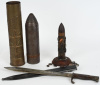
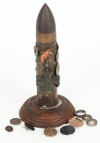
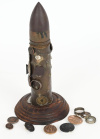
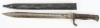
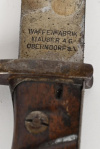
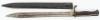
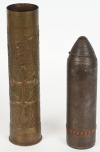
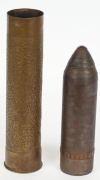
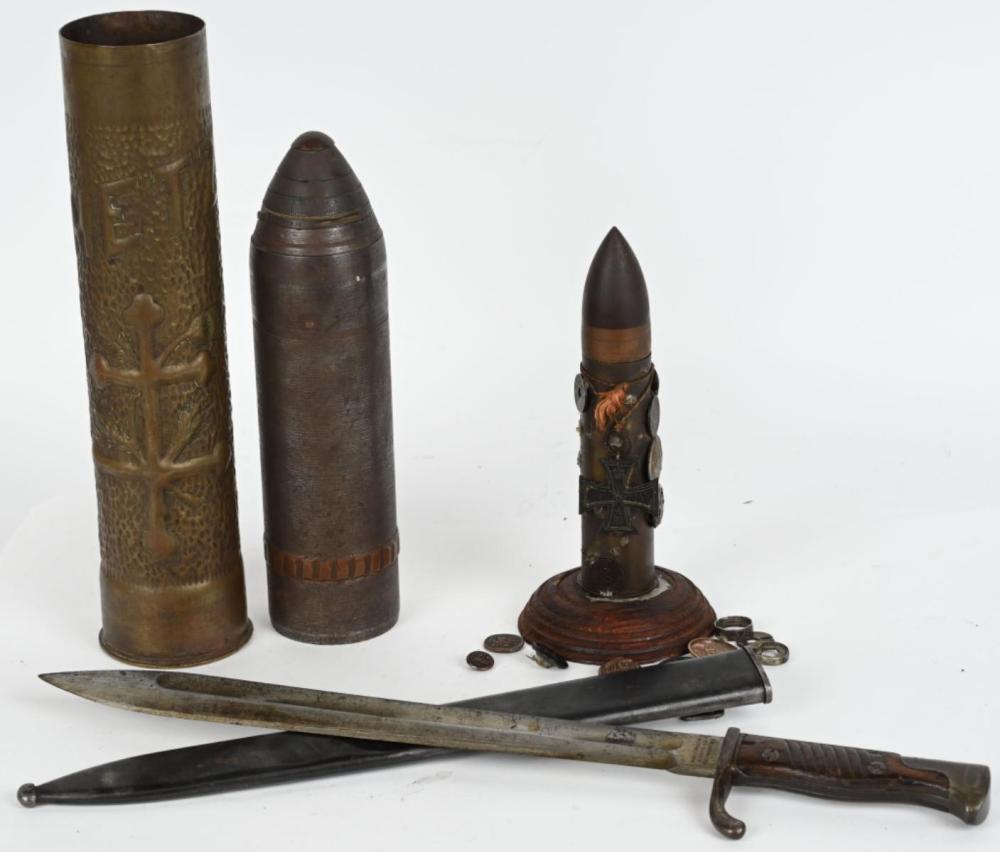
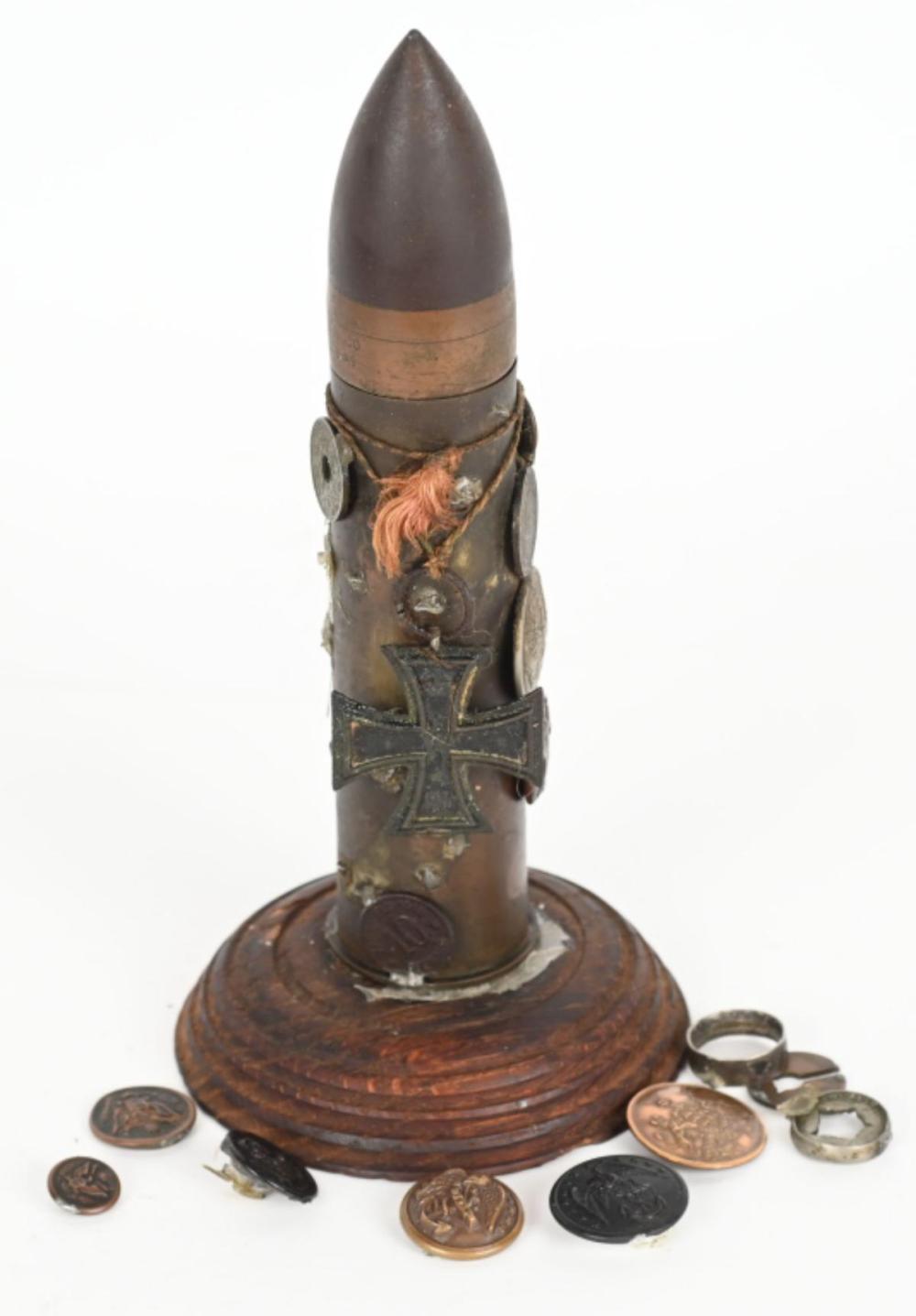
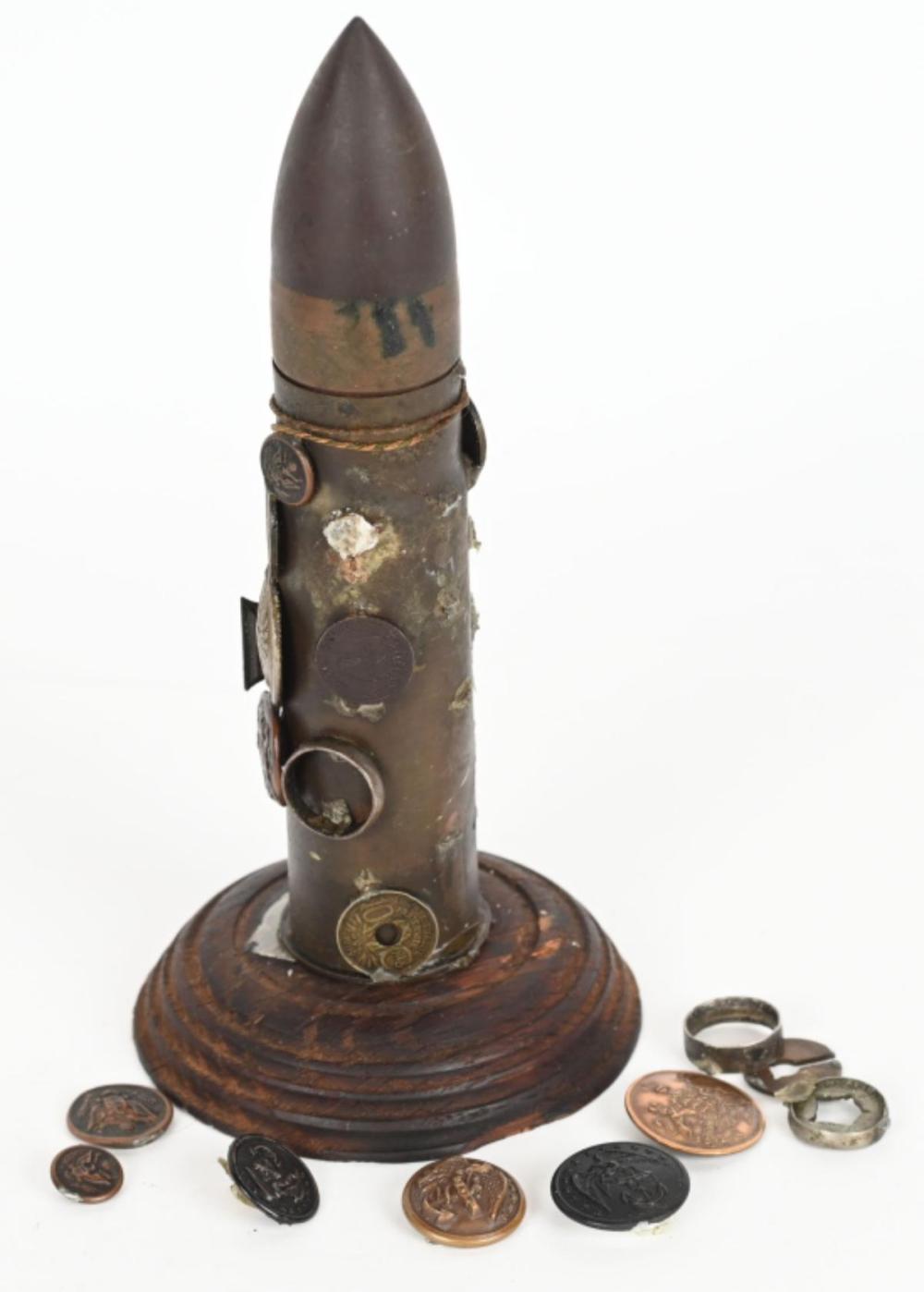
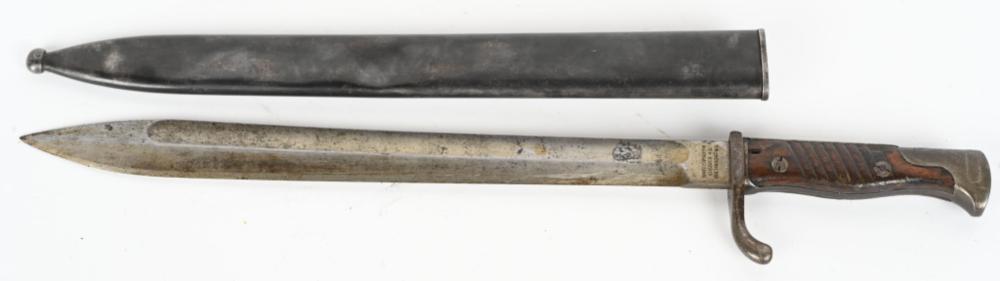
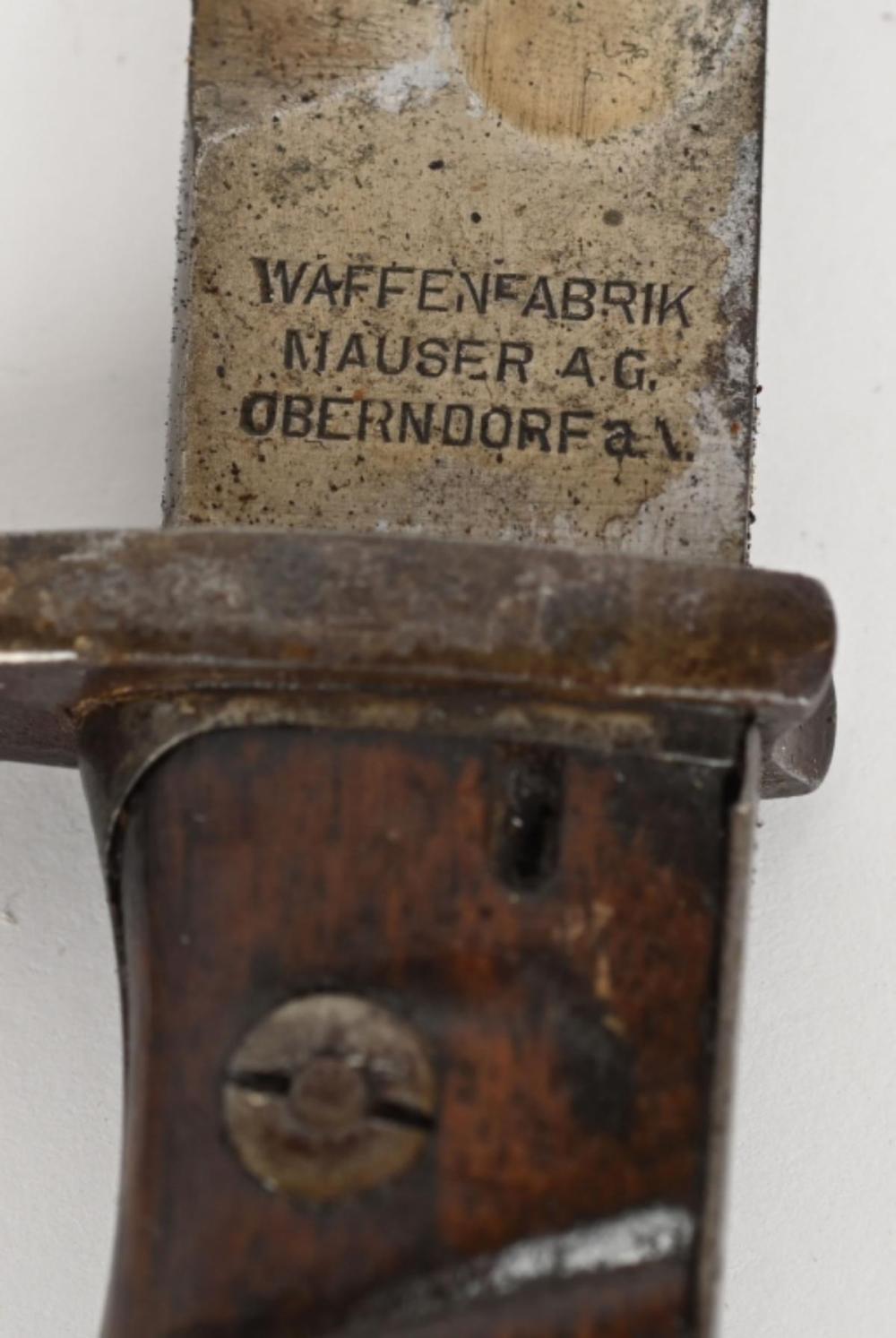
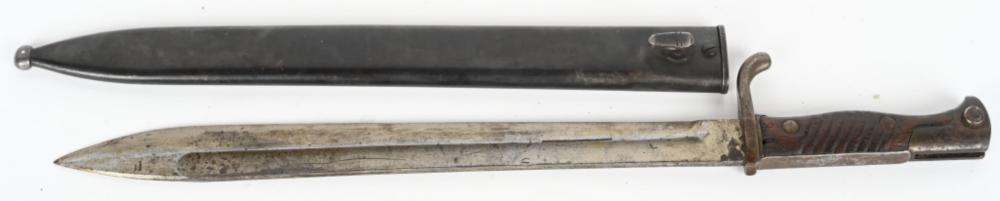
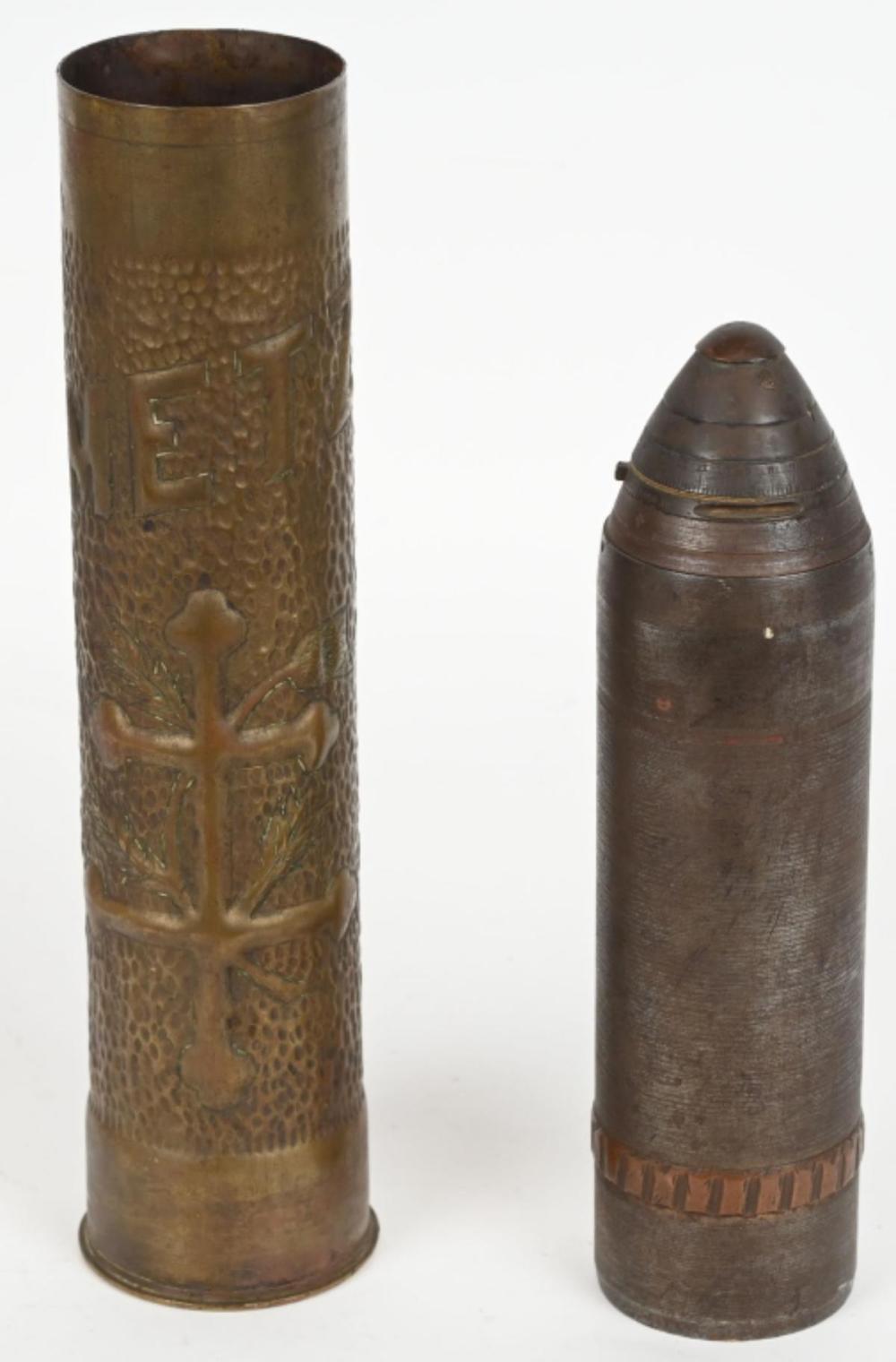
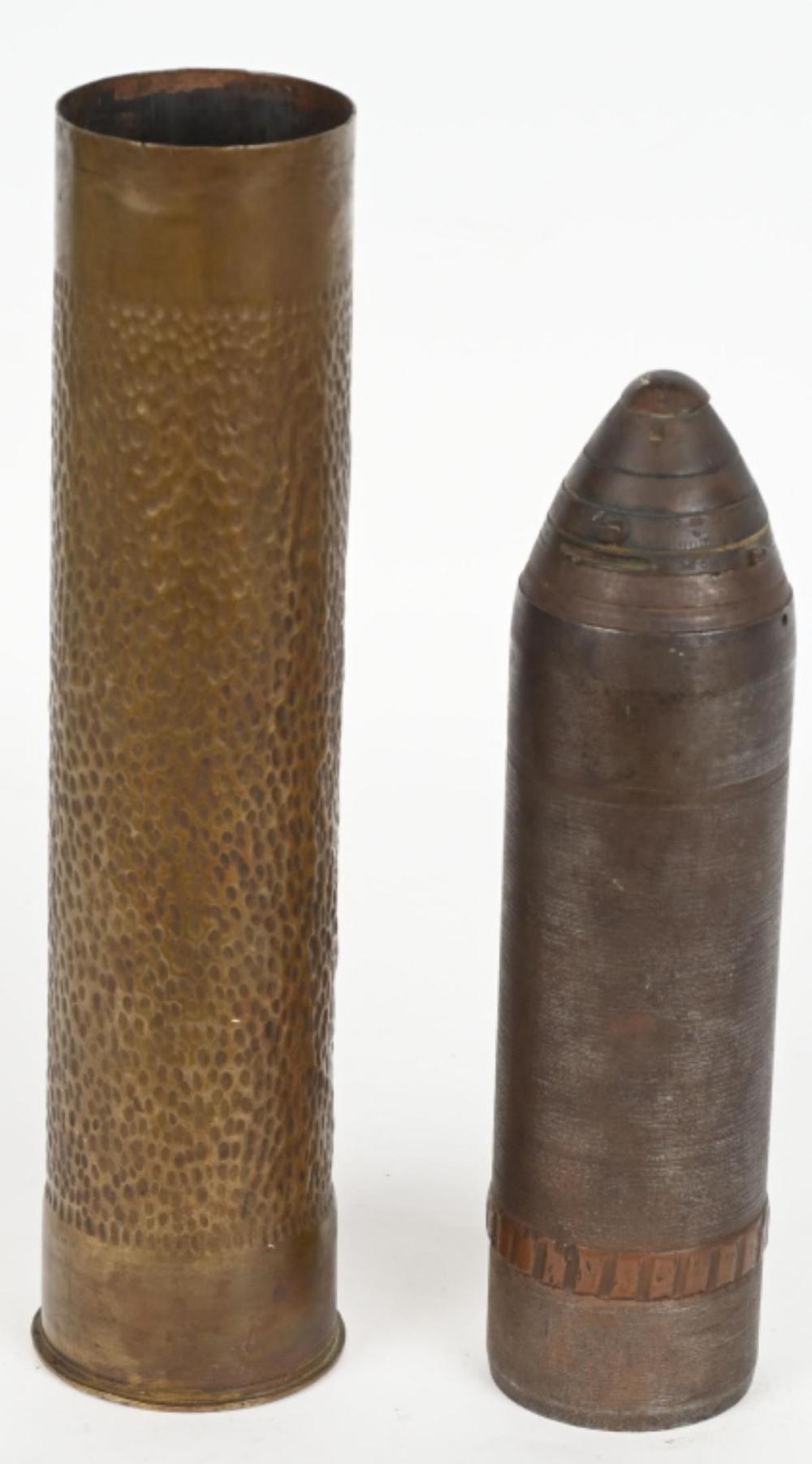
Lot of three WW1 items to include 1) 37MM TRENCH ART ARTILLERY SHELL. Shell is mounted on a wood base and attached to the sides of the brass casing are several momentous including a Iron Cross 2nd Class, Coins, Buttons and Mens Rings. The buttons range from US Army, Marine Corps and German. The shell is US and is marked on steel casing. 2) 75MM TRENCH ART SHELL FROM METZ. Very attractive 75mm shell that is completely inert. The shell still retaining it's projectile and fuze. The brass casing has in high relief METZ along with the Cross of Lorraine. Inside the shell are period printed maps of France. The forts of Metz are two fortified belts around the city of Metz in Lorraine. Built according to the design and theory of Raymond Adolphe Séré de Rivières at the end of the Second Empireand later Hans von Biehler while Metz was under German controlthey earned the city the reputation of premier stronghold of the German reich. These fortifications were particularly thorough given the city's strategic position between France and Germany. The detached forts and fortified groups of the Metz area were spared in World War I, but showed their full defensive potential in the Battle of Metz at the end of World War II. Context: Before the invention of rifled artillery, the place de Metz was considered untakeable. In the 19th century, improvements in artillery forced French engineers to conceive a new defensive system around the stronghold of Metz, the first fortified belt. For this work marshal Adolphe Niel allocated a sum of twelve million gold francs, used for four detached advance forts, Saint-Quentin and Plappeville to the west, and the Fort de Saint-Julien and Fort de Queuleu to the east. This measure, conceived by colonel Séré de Rivières, was incomplete when war broke out in 1870. After the Treaty of Frankfurt, the defenses of Metz were completed by German military engineers, who added seven more forts between 1871 et 1898. These forts, designed by Hans von Biehler, made up the first fortified belt of Metz. The purpose of this first belt was to hold attackers at a distance and keep them away, thus protecting the city from direct enemy fire. The forts could also assist troop maneuvers outside the fort by providing supporting fire. Because of advances in artillery technology, between 1899 and 1916 the first belt was reinforced by a second, composed of nine fortification groups. Based on new concepts of defense, such as dispersion and dissimulation, the fortification groups were intended to constitute an uncrossable barrier to any attacking French forces. The fortifications of Metz were part of a larger program of fortifications called Moselstellung which fortresses scattered between, Thionville et Metz in the Moselle valley. The German objective was on the one hand to protect against a French attempt to retake Alsace-Lorraine from the German Empire, and on the other to form an advance post in French defenses capable of serving as a rear base to a German offensive. For this major strategic point in the empire's defenses, the German command kept work going on the fortifications until World War I. Emperor Wilhelm II, who regularly came to Metz to inspect the construction, said on this subject: "Metz and its army corps constitute a cornerstone of the military might of Germany, destined to protect the peace of Germany, even of all of Europe, a peace I have the firm will to safeguard." Within its walls Metz was then a vibrant German garrison town manned with Bavarians in cloth caps, Prussians and Saxons in pointed helmets and dark green uniforms, and Hessians in light green uniforms. The German garrison oscillated between 15,000 and 20,000 at the beginning of the period and reached 25,000 before the First World War. Many German officers belonging to the Prussian military aristocracy settled in Metz with their families, which explains the more than forty German generals born in Metz. Rotations brought some of the most famous names of the German army there, such as Goring, Ribbentrop or Guderian, and gave the German high command the conviction that this stronghold, thought to be untakeable, was unquestionably German. At the onset of World War I Metz was considered one of the most formidable strongholds in the world. Paradoxically, the city was spared from combat. These fortifications proved their defensive capabilities at the end of the Second World War. During the Battle of Metz the forts de Metz, despite the ravages of time, despite undermanning and a definite lack of weaponry, shielding and optical equipment, blocked a powerful army, much superior to the French Army of 1914. 3) WW1 GERMAN BAYONET BUTCHER BLADE 1916 WWI. Nice butcher blade marked WAFFENFABRIK MAUSER-A.G. OBERNDORF a.N. in 1916. Second pattern model 1898/05 bayonet, with the flash guard along the back of its grips introduced in 1915, known as the S 98/05 nA ("Seitengewehr 98/05 neuer Art," or, Bayonet 98/05 new Pattern).
-
Sign in to view
Lot number
-
Sign in to view
Estimate
-
2024-06-29
Sale date
-
Sign in to view
Realised price
-
Sign in to view
Opening price
-
Sign in to view
House name
-
Sign in to view
Auction sale name
-
Sign in to view
Location
-
Categories
Sign in to view -
Tags
Sign in to view